πέραν
through (as adverb or preposition), i.e. across
Everything you need to know.
of Completion
This certifies that
Is on track to complete the Bible for the 1st time in 240 days.
Paul's Handkerchief is Bible study with a difference — going word-by-word through Scripture to reclaim the Ancient Near East context, romance, and mystery that modern translations often leave behind.
Only about 3% of people around the world who start the Bible ever finish it. The 3% Club is for those ready to break that cycle — reading the entire Bible at their own pace, backed by community and tools built to make finishing not just possible, but inevitable. You also get a certificate to celebrate your achievement.
Bible Cafe isn't just Bible study — it's a personal, intimate conversation with Him. Think less classroom, more kitchen table. It combines the original Coffee with Jesus experience with activities like quizzes, crosswords, journaling and more, all designed to let the Word shape your heart, not just your head.
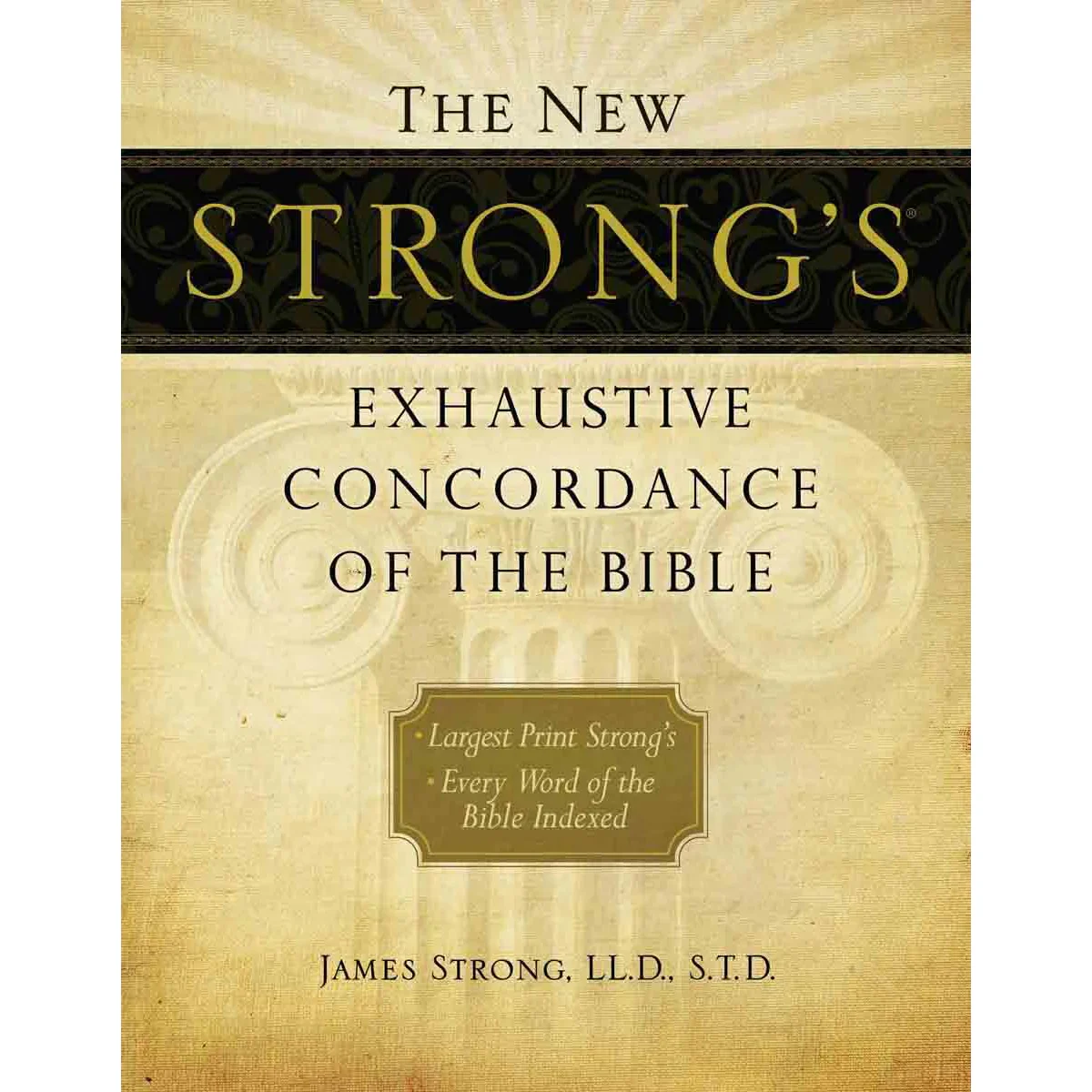
Most English Bibles can't carry the full weight of what's in the original Hebrew and Greek. The F.O.G Bible Project exists to change that — three new translations built publicly (a Study Bible, a Reader's Bible, and F.O.G Jr. for younger readers), plus a word-by-word renewal of Strong's Concordance restoring the depths most translations leave behind. It is Jean Paul's lifelong work, unfolding in public — and you're invited in.
Jean Paul Joseph is the lead editor of the F.O.G Bible Project. He works from a personal encounter with Jesus first, then draws on the scholarship of respected Jewish and Christian scholars — because the church was Jewish before it was anything else, and those roots change everything about how you read Scripture.
Simply create an account and choose your preferred Bible and reading style. The app will track your progress and help keep you accountable to the rhythm of daily Scripture engagement.
through (as adverb or preposition), i.e. across
πέραν(péran)
Strong’s Definition
through (as adverb or preposition), i.e. across
apparently accusative case of an obsolete derivative of (to "pierce");
“The land of Zabulon, and the land of Nephthalim, by the way of the sea, beyond Jordan, Galilee of the Gentiles;”
No verses found containing this word study ID.
The Invisible Crossing: How a Small Word Carries You from One World to Another
There is a word in the Greek tongue that the eye passes over like a stone on the path — small, unadorned, barely noticed. Yet this word, appearing twenty-three times in the New Covenant writings, holds within its three syllables the very structure of redemption. The word is πέραν (péran), and it means across, beyond, the other side. It is a grammatical particle of passage, a linguistic ferryman that carries you from one shore to another. In the Koine Greek of the first century, this word marked not merely a spatial relationship but a theological boundary. Every time you encounter πέραν, you are being asked: Which side are you on? And will you dare to cross?
The Piercing Root: From Wounding to Crossing
The ancient sages who shaped the Greek language understood that to cross is to pierce. The root from which πέραν derives speaks of something that pierces through — a spear that goes beyond the surface, a word that penetrates the heart. In classical Greek, the word carried the sense of reaching the farther bank of a river, of passing through a gate, of journeying to the limits of the known world. But when the Holy Spirit breathed upon this word through the apostles, it became something far more intimate. The Septuagint, that precious bridge between Hebrew and Greek, uses πέραν to translate the Hebrew ever — the same word that speaks of the other side of the Jordan, the land of promise that lay beyond the waters of deliverance. When Joshua led the people across the river, they crossed into a new covenant, a new inheritance. Every use of πέραν in the Greek Scriptures echoes that first great crossing, calling you to leave the wilderness behind and step into what God has prepared.
The First Crossing: Where the Word Appears at the Beginning
Open the New Testament and you will find πέραν standing at the threshold of the Messiah’s ministry. In Matthew 4:15, the prophet Isaiah is quoted: “Land of Zebulun and land of Naphtali, the way of the sea, beyond the Jordan, Galilee of the Gentiles.” Here, πέραν marks the very region where Yeshua began to preach, to heal, to call disciples. The word does not merely describe geography — it announces a divine strategy. The Messiah began His work not in the holy city, not at the Temple mount, but beyond the Jordan, in a land of mixed peoples, of shadow and longing. The apostolic tradition teaches that this was no accident. The early church understood that the crossing of the Word into Gentile territory began at this very word. πέραν became the hinge upon which the door of the nations swung open. What was once considered the far side, the unclean side, the side of exile — this became the first place where the light of the world shone.
The Theological Weight of a Preposition: Crossing as Covenant
In the grammar of the Spirit, particles are never empty. They carry the weight of relationship. When the Gospel writers say that Yeshua went “to the other side” (Mark 4:35, Mark 5:1, Mark 6:45), they are not giving travel directions. They are describing the movement of redemption itself. The sea in Jewish imagination is chaos, the deep, the realm of death and demons. To cross to the other side is to enter enemy territory, to descend into the abyss, and to emerge victorious. Jewish tradition holds that the crossing of the Red Sea was the birth of Israel as a nation; the crossing of the Jordan was the death of the wilderness generation and the beginning of conquest. In the same way, every time Yeshua crosses the Sea of Galilee, He is re-enacting the Exodus. He is the new Moses, the true Joshua, leading His people from bondage to freedom, from the near side to the far side, from death to life. The word πέραν holds within it the entire story of salvation: you were on one side, and the Messiah came to bring you to the other.
Send a Gift
This website is 100% donor-funded. Your generosity allows someone else to access this content for free.
Give a gift of $100 to sponsor a verse or page of your choice.
Hinge of the Gospel: The Famous Verse Where All Turns
There is one verse where πέραν becomes the very pivot upon which the New Testament interpretation of the Messiah turns. In John 6:22, after the feeding of the five thousand, the crowd searches for Yeshua. They saw that He had not entered the boat with His disciples, but that the disciples had gone away alone to the other side. The word appears again and again in this chapter — the crossing, the bread from heaven, the manna in the wilderness. But the deepest hinge comes in John 6:25, when the crowd finds Him on the other side of the sea. They ask, “Rabbi, when did you come here?” And Yeshua answers not with a time, but with a truth: “You seek me not because you saw signs, but because you ate the loaves and were filled.” The crossing becomes the context for the Bread of Life discourse. πέραν is the word that separates those who seek signs from those who seek the Sign. The early church saw in this the great mystery: the Messiah had crossed not only the sea but the boundary between heaven and earth. He had come from the other side of eternity to feed His people with His own flesh.
The Septuagint Bridge: Which Hebrew Word Does This Greek Word Carry?
The Greek πέραν in the Septuagint most frequently translates the Hebrew ever (עֵבֶר), a word that means the region beyond, the other side, and also a crossing place. This is the word used for the land “beyond the Jordan” (Deuteronomy 1:1, Joshua 1:14), and it carries the sense of a boundary that must be passed to enter into promise. But there is a deeper resonance. The Hebrew ever shares its root with Ibri — Hebrew — the name given to Abraham, the one who crossed over from Ur of the Chaldeans to the land of Canaan. To be a Hebrew is to be a crosser, one who leaves the old country for the new, one who abandons the gods of the nations to walk with the living God. When the LXX translators chose πέραν to render ever, they were declaring that every crossing in Scripture is a remembrance of Abraham’s faith. And when Paul writes that believers are children of Abraham (Galatians 3:7), he is saying that you too are a crosser. You have been called πέραν — beyond the world, beyond the flesh, beyond the old self, into the Messiah.
The Messiah and the Crossing: Yeshua as the Bridge
The New Testament writers apply πέραν to Yeshua in a way that transforms the word itself. In Mark 5, Yeshua crosses to the other side of the sea and meets a man possessed by a legion of demons. The demons beg not to be sent “out of the country” (Mark 5:10), but Yeshua sends them into the abyss. The crossing of the Messiah is always a confrontation with the powers of darkness. In Mark 6, after walking on the water, Yeshua climbs into the boat and immediately they are at the other side (Mark 6:51-53) — a miracle of compressed space, a hint that the One who crosses the sea is the same One who created it. The apostolic faith proclaims that Yeshua Himself is the πέραν — He is the way across. He is the bridge between God and man, between the old creation and the new, between judgment and mercy. When you stand at the shore of your own impossibility, He is already on the other side, calling you to come. The fathers of the faith observed that every crossing in the Gospels is a small resurrection. To go to the other side with Yeshua is to die and rise again.
Your Life Held by Divine Grammar
You may think that your life is a collection of scattered moments, but the Spirit sees it as a crossing. Every trial you face is a sea, every loss is a river, every fear is a wilderness you must leave behind. The word πέραν is not merely a piece of ancient vocabulary — it is the pattern of your redemption. You were on the side of death, and the Messiah crossed the abyss to reach you. Now He bids you to cross with Him. The rabbis of old observed that the righteous are always those who cross over — from slavery to freedom, from despair to hope, from this age to the age to come. So I ask you, beloved: What shore are you standing on today? The boat is waiting. The Master is on the water. The other side is not merely a place — it is a Person. And He is calling you by name. Cross over. The grammar of Heaven holds you, and every step you take in faith is a πέραν — a holy crossing into the arms of the One who went beyond all things to bring you home.