πεντακισχίλιοι
five times a thousand
Everything you need to know.
of Completion
This certifies that
Is on track to complete the Bible for the 1st time in 240 days.
Paul's Handkerchief is Bible study with a difference — going word-by-word through Scripture to reclaim the Ancient Near East context, romance, and mystery that modern translations often leave behind.
Only about 3% of people around the world who start the Bible ever finish it. The 3% Club is for those ready to break that cycle — reading the entire Bible at their own pace, backed by community and tools built to make finishing not just possible, but inevitable. You also get a certificate to celebrate your achievement.
Bible Cafe isn't just Bible study — it's a personal, intimate conversation with Him. Think less classroom, more kitchen table. It combines the original Coffee with Jesus experience with activities like quizzes, crosswords, journaling and more, all designed to let the Word shape your heart, not just your head.
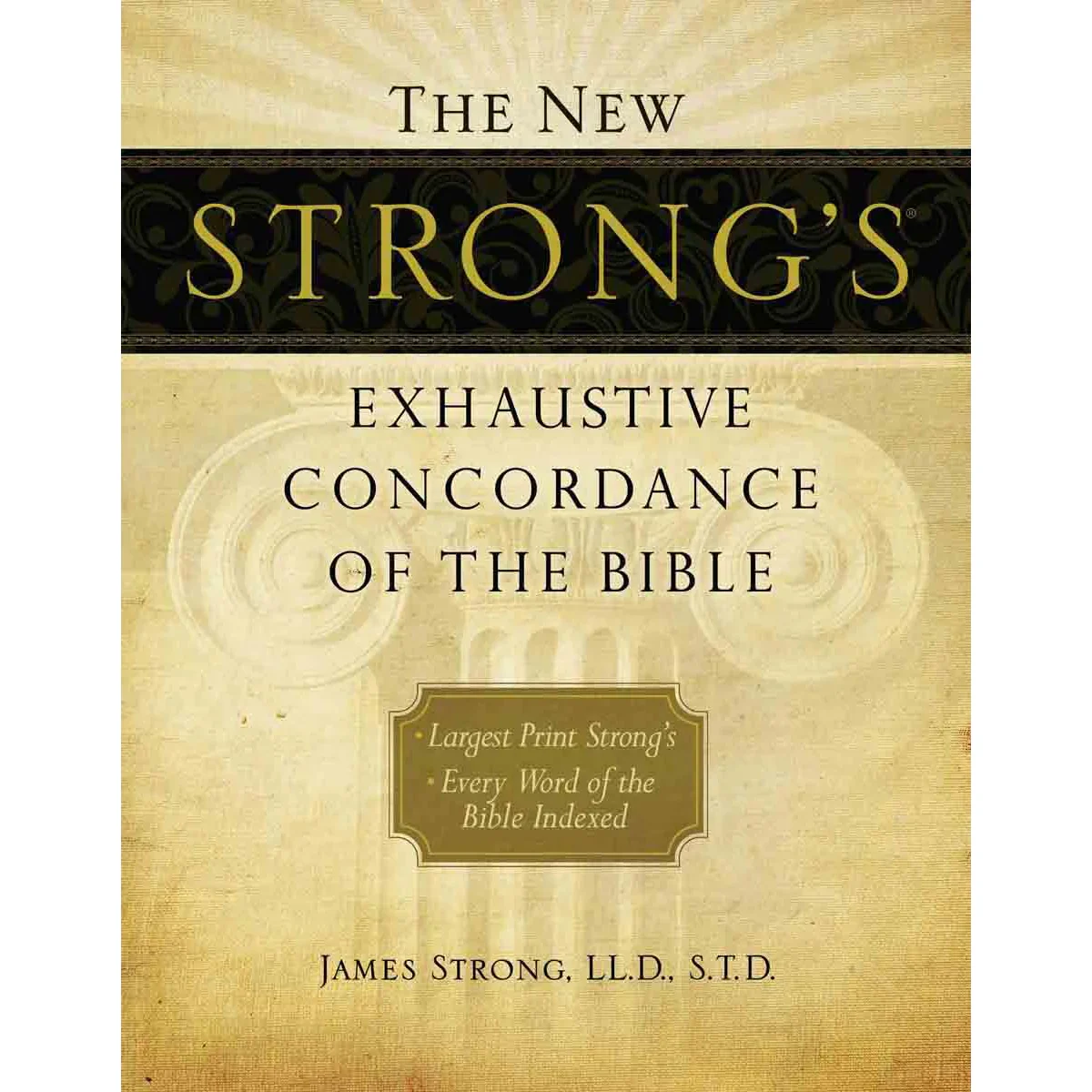
Most English Bibles can't carry the full weight of what's in the original Hebrew and Greek. The F.O.G Bible Project exists to change that — three new translations built publicly (a Study Bible, a Reader's Bible, and F.O.G Jr. for younger readers), plus a word-by-word renewal of Strong's Concordance restoring the depths most translations leave behind. It is Jean Paul's lifelong work, unfolding in public — and you're invited in.
Jean Paul Joseph is the lead editor of the F.O.G Bible Project. He works from a personal encounter with Jesus first, then draws on the scholarship of respected Jewish and Christian scholars — because the church was Jewish before it was anything else, and those roots change everything about how you read Scripture.
Simply create an account and choose your preferred Bible and reading style. The app will track your progress and help keep you accountable to the rhythm of daily Scripture engagement.
five times a thousand
πεντακισχίλιοι(pentakischílioi)
Strong’s Definition
five times a thousand
from G3999 (πεντάκις) and G5507 (χίλιοι);
“And they that had eaten were about five thousand men, beside women and children.”
No verses found containing this word study ID.
The Bread of the Multitude, the Number of the Covenant
Six times the Holy Spirit breathes this number into the New Testament—pentakischílioi, five thousand—and each utterance echoes with the sound of a miracle breaking through the ordinary. This is not merely a count of men, but a measure of divine abundance. The word itself is a joining of two forces: pentákis, meaning five times, and chílioi, meaning a thousand. Together they form a number that appears at the threshold of impossibility, where human resources fail and heaven's provision begins. Five is the number of grace in the ancient Hebrew mind, the hand that gives and receives. A thousand is the language of completeness, of generations, of the Lord owning the cattle on a thousand hills. When these two meet, grace multiplies into superabundance, and you find yourself standing on the shore of a sea that cannot be crossed by human strength alone.
The First Miracle and Its Hidden Grammar
The first appearance of pentakischílioi in the apostolic record occurs at the feeding of the multitude, that great sign recorded in all four Gospels. In Matthew 14:21, the text tells you that those who ate were about five thousand men, besides women and children. The Greek word carries a precision that the KJV translators honored—five times a thousand, not an approximation but a deliberate count. Yet the early church understood that this number was not merely statistical but sacramental. The apostolic tradition teaches that just as five books of Moses formed the foundation of Israel's covenant, so five thousand souls received the bread of the wilderness miracle. The rabbis of old observed that the number five in Hebrew scripture often points to the fivefold revelation of Torah, and here the Messiah takes five loaves to feed five thousand—a living Torah breaking bread for the hungry. The Septuagint uses this same word in places like Numbers 1:46 to count the men of war, but here the counting is not for battle but for blessing. The shift from classical Greek, where numbers merely enumerate, to the Koine of the New Testament, where numbers signify, is the shift from arithmetic to mystery.
The Septuagint Bridge: From Census to Compassion
When the translators of the Septuagint chose pentakischílioi to render the Hebrew chamesh elef in the wilderness census, they were building a bridge between two testaments. In Numbers 1:21, the tribe of Reuben numbered forty-six thousand five hundred, but the word for that final five hundred is not our word—it is a different construction. The precise pentakischílioi appears in the LXX when the count reaches exactly five thousand, as in the numbering of the Levites in Numbers 3:39. This is no coincidence. The Levites, set apart for the service of the sanctuary, were counted with a number that would later mark the feeding of the multitude. The early church fathers, particularly Justin Martyr, saw in this a pattern: the Levites served the tabernacle of Moses, but the five thousand served the tabernacle of the Word made flesh. Every Greek word in the New Testament that carries a Hebrew shadow from the LXX is a thread in the tapestry of redemption. Here, pentakischílioi weaves together the census of the wilderness and the compassion of the Galilean hills, showing you that the God who counts His people is the God who feeds them.
The Apostolic Fingerprint: John's Theological Number
While all four Gospels record the feeding of the five thousand, the apostle John gives this number its deepest theological resonance. In John 6:10, the evangelist notes that the men sat down, about five thousand in number, and then the discourse on the Bread of Life begins. John alone connects the miracle of pentakischílioi with the revelation of Yeshua as the true manna from heaven. The early church understood that the number itself was a signpost: five thousand men, the five loaves, the five books of Moses—all pointing to the insufficiency of the old covenant and the superabundance of the new. Clement of Alexandria observed that the multiplication of the loaves was a living parable of the Word multiplying itself in the hearts of believers. The number five thousand, then, is not a statistic to be memorized but a mystery to be entered. When you read John's account, you are not learning how many people ate that day—you are learning that the Messiah's provision exceeds every census, every count, every human calculation.
Send a Gift
This website is 100% donor-funded. Your generosity allows someone else to access this content for free.
Give a gift of $100 to sponsor a verse or page of your choice.
The Hidden Geometry of Grace
The number five thousand appears in the Greek scriptures only in connection with this miracle and its repetition, but its echoes reach back into the Hebrew scriptures through the Septuagint. In 1 Kings 5:14, the LXX uses pentakischílioi to describe the five thousand men who cut timber for the Temple under Solomon's reign. Here is a hidden geometry: the woodcutters prepared the physical house of God, while the five thousand in the Gospels received the spiritual house of God in the person of Yeshua. The apostolic tradition teaches that every number in scripture is a door, and pentakischílioi opens onto a room where human need meets divine abundance. The fathers of the faith observed that the five thousand men did not include women and children, so the actual number fed was far greater—and yet the text counts only the men, as if to say that the miracle's scale is beyond numbering, but its foundation is precisely known. You are invited to see that your own need, though it feels like a great multitude within you, is known and counted by the One who multiplies bread.
The Messianic Multiplication: Yeshua and the New Exodus
The New Testament writers apply pentakischílioi directly to the person and work of Yeshua in a way that transforms the number from a count into a confession. In Mark 6:44, the text says those who ate the loaves were five thousand men, and immediately afterward the Messiah walks on water and declares, "It is I; do not be afraid." The early church saw in this sequence a new Exodus: just as Moses led five hundred thousand out of Egypt but only five thousand received the manna in the wilderness typology, so now the true Moses feeds five thousand with bread from heaven. The apostolic faith teaches that the multiplication was not merely a miracle of provision but a sign of the new creation. Where the old Adam brought scarcity, the new Adam brings abundance. Where the Law could count sins, grace can count forgiveness. The five thousand represent the firstfruits of a harvest that will include every tribe and tongue—a number that no one can count, yet every soul is known by name. Yeshua takes the five thousand, and in His hands, they become the beginning of the world to come.
Your Place at the Table of the Five Thousand
You have been counted among the pentakischílioi. Not because you are a statistic in some divine ledger, but because the Messiah sees your hunger and calls you to sit down on the green grass. The number that once measured a miracle now measures your life: five times a thousand, grace multiplied beyond measure. When you bring your five loaves—your small faith, your meager strength, your ordinary day—the Lord takes them, blesses them, breaks them, and gives them back to you as abundance. The early church understood that the leftover fragments, twelve baskets full, were for the twelve tribes of Israel, a sign that the blessing was not exhausted but reserved for all who would come after. You are one of those who gather the fragments. The feeding of the five thousand did not end on that Galilean hillside; it continues every time you break bread in remembrance of Him. So come to the table, not as a number, but as a beloved soul for whom the bread was multiplied. The count is complete, but the feast has only begun.