καθαιρέω
to lower (or with violence) demolish (literally or figuratively)
Everything you need to know.
of Completion
This certifies that
Is on track to complete the Bible for the 1st time in 240 days.
Paul's Handkerchief is Bible study with a difference — going word-by-word through Scripture to reclaim the Ancient Near East context, romance, and mystery that modern translations often leave behind.
Only about 3% of people around the world who start the Bible ever finish it. The 3% Club is for those ready to break that cycle — reading the entire Bible at their own pace, backed by community and tools built to make finishing not just possible, but inevitable. You also get a certificate to celebrate your achievement.
Bible Cafe isn't just Bible study — it's a personal, intimate conversation with Him. Think less classroom, more kitchen table. It combines the original Coffee with Jesus experience with activities like quizzes, crosswords, journaling and more, all designed to let the Word shape your heart, not just your head.
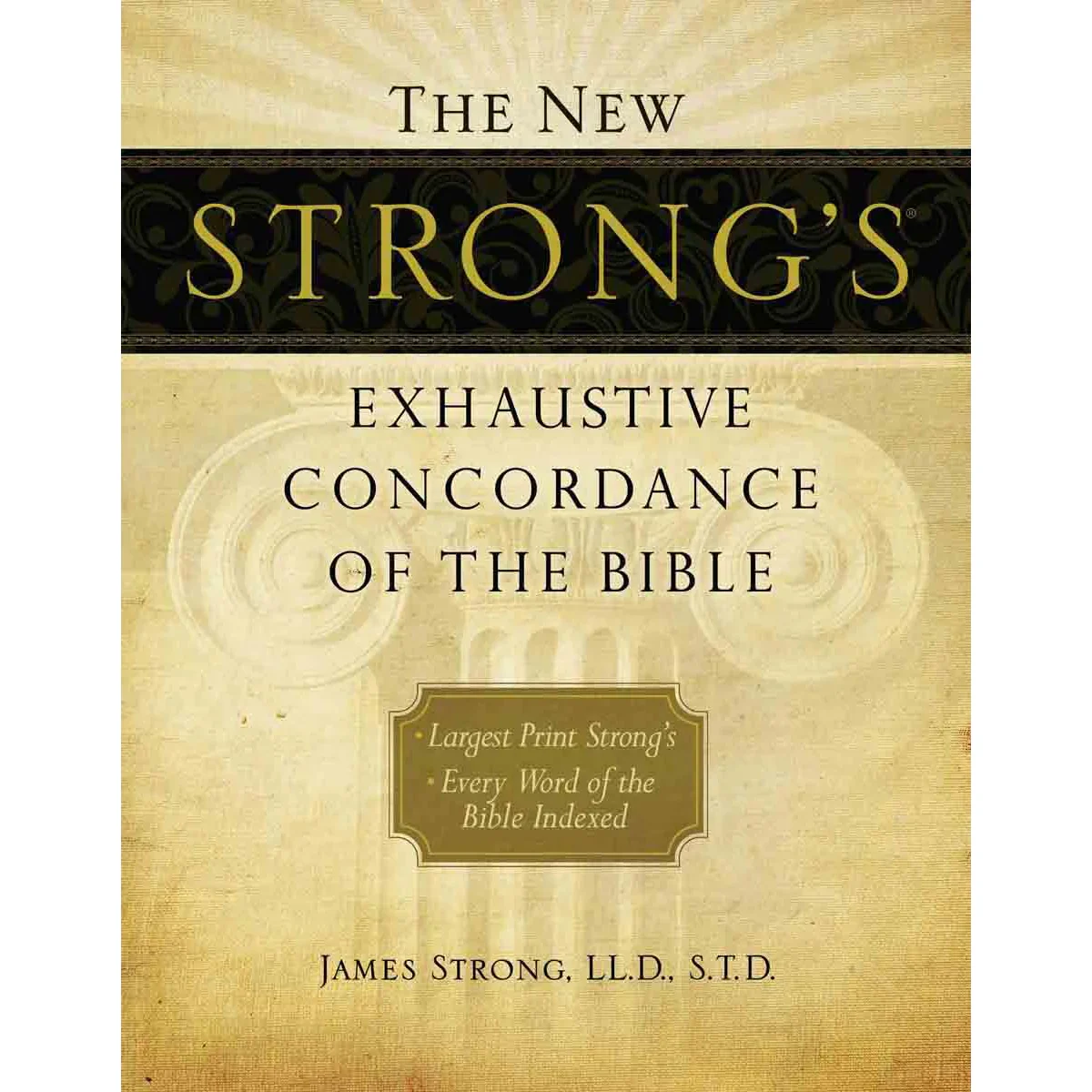
Most English Bibles can't carry the full weight of what's in the original Hebrew and Greek. The F.O.G Bible Project exists to change that — three new translations built publicly (a Study Bible, a Reader's Bible, and F.O.G Jr. for younger readers), plus a word-by-word renewal of Strong's Concordance restoring the depths most translations leave behind. It is Jean Paul's lifelong work, unfolding in public — and you're invited in.
Jean Paul Joseph is the lead editor of the F.O.G Bible Project. He works from a personal encounter with Jesus first, then draws on the scholarship of respected Jewish and Christian scholars — because the church was Jewish before it was anything else, and those roots change everything about how you read Scripture.
Simply create an account and choose your preferred Bible and reading style. The app will track your progress and help keep you accountable to the rhythm of daily Scripture engagement.
to lower (or with violence) demolish (literally or figuratively)
καθαιρέω(kathairéō)
Strong’s Definition
to lower (or with violence) demolish (literally or figuratively)
from G2596 (κατά) and G138 (αἱρέομαι) (including its alternate);
“And one ran and filled a spunge full of vinegar, and put it on a reed, and gave him to drink, saying, Let alone; let us see whether Elias will come to take him down.”
No verses found containing this word study ID.
The Hand That Brings Down and the Hand That Lifts Up
Beloved, listen. The word kathairéō appears only eleven times in the New Testament, yet in those few moments it carries the full weight of heaven’s judgment and heaven’s mercy. It is a verb of violent lowering — to cast down, to pull down, to demolish. But hear me: the same hand that brings down the proud also reaches down to raise the broken. This is the mystery of our God, who is both the Builder and the One who tears away what must fall. The first place you encounter this word in the Greek Scriptures is in the gospel of Luke, where the mother of our Lord sings of a God who scatters the proud in the imagination of their hearts and kathairéō — pulls down — the mighty from their thrones (Luke 1:52). From that opening note, the entire story of redemption begins to tremble.
The Grammar of Humble Strength
The word kathairéō is built from two parts: kata, meaning down, and hairéō, meaning to take or to choose. Together they form a word that means to take down forcefully. But the Greek grammarians among you must pay attention: the aorist tense dominates this verb’s usage, and the aorist in Greek does not simply describe an action — it captures the action as a single, completed event. When the angel told Mary that God would kathairéō the mighty, the tense declared it a settled reality before any throne had visibly fallen. The apostles understood this. Paul, writing to the Corinthians, uses the perfect passive participle of this same verb: every lofty thing that exalts itself against the knowledge of God is being kathairéō — cast down — and the passive voice tells you that the proud object does not cast itself down; it is brought low by another (2 Corinthians 10:5). The grammar itself is a confession: no fortress of human arrogance can withstand the downward pull of the Holy One.
The Siege of the Soul
In the ancient world, kathairéō was a word used by generals describing the demolition of enemy fortifications. When Josephus wrote of Roman siege engines battering the walls of Jerusalem, this was the verb he chose. But the New Testament writers took this violent military term and turned it inward. Paul does not speak of tearing down stone walls but of tearing down logismous — arguments, reasonings, every pretension that sets itself up against the knowledge of God (2 Corinthians 10:4-5). The early church understood this as the soul’s true warfare. Clement of Rome, writing to the Corinthians, urged believers to cast down every jealous and contentious thought as though dismantling a citadel within the heart. The apostolic faith teaches that the most important battle is not fought on hills of earth but on the hills of the mind, where pride builds its towers and only the hand of God can bring them low.
The Septuagint Bridge
When the translators of the Septuagint rendered the Hebrew Scriptures into Greek, they chose kathairéō to carry the weight of a profound Hebrew verb — yarad, meaning to go down or descend, and also haras, meaning to tear down or overthrow. In the prophet Jeremiah, you find this Greek verb used to describe the Lord tearing down what He had built, plucking up what He had planted (Jeremiah 1:10). This is the terror and the tenderness of God: the same mouth that speaks the word of building also speaks the word of demolition. The rabbis of old observed that the prophetic calling was never merely to announce destruction but to clear ground for a new planting. When the Greek kathairéō stands in the place of the Hebrew haras, you are witnessing the intertestamental bridge — a word that crossed languages carrying the full weight of covenant judgment and covenant hope. The God who tears down is the God who rebuilds, and the demolition is always in service of a more enduring sanctuary.
Send a Gift
This website is 100% donor-funded. Your generosity allows someone else to access this content for free.
Give a gift of $100 to sponsor a verse or page of your choice.
The Apostolic Sword
Luke, the beloved physician, uses kathairéō more than any other New Testament writer. He employs it three times in his gospel and twice in Acts, and each occurrence marks a hinge point in the story of salvation. In Acts 19:27, the silversmiths of Ephesus cry out that their goddess Artemis might be kathairéō — deposed from her magnificence — and the entire city erupts. Luke is showing you something: when the gospel advances, the false gods are not merely ignored; they are actively brought down. But notice the pattern. In the same book, the Lord tells Ananias that Saul of Tarsus is a chosen vessel, and that Saul will suffer many things — and the word used for the suffering Paul will endure is not kathairéō but a different verb. Paul himself will be beaten, stoned, and imprisoned, but he will not be cast down. The apostolic tradition teaches that the servant of God may be struck but never demolished, because the One who brings down the proud preserves the humble.
The Demolition of Death
Now let us speak of the Messiah. In the gospel of Mark, when the crowd rages against Yeshua and cries out for His crucifixion, the chief priests and the scribes are described as those who have authority — but their authority is borrowed. Yeshua alone holds the power to kathairéō the ultimate stronghold. The fathers of the early church saw this clearly: when Christ descended into the grave, He entered the fortress of death itself and pulled it down from within. The apostolic faith confesses that the resurrection was not merely an escape from death but the demolition of death’s power. Justin Martyr, writing in the second century, described the cross as the siege engine of heaven, the instrument by which the Prince of Darkness was cast down from his throne. Yeshua fulfilled this action not with violence against others but with violence against the enemy that held humanity captive. He was lifted up so that the stronghold of sin might be kathairéō forever.
The Fall That Saves
There is a paradox in this word that the sages of Israel would have cherished. In the Greek world, kathairéō carried the sense of destroying something completely, leaving nothing behind. But in the hands of the Holy One, the destruction becomes a purification. The very word shares its root with katharos, meaning clean or pure. Jewish tradition holds that the One who creates also has the right to unmake, but His unmaking is always a preparation for remaking. When God brings down the walls of Jericho, He is not destroying for destruction’s sake — He is clearing a space for His people to dwell. When the temple was torn down in the days of Jeremiah, the demolition was the birth pang of a new covenant. So also in your own life: every proud thing that must be kathairéō within you is a wall that stands between you and the promised land of His presence.
Your Calling to This Action
And now, beloved, I must speak directly to you. You have been given authority in the name of Yeshua to participate in this holy demolition. The apostle Paul did not merely describe the casting down of arguments — he commanded it. You are called to examine the fortresses within your own soul, the high towers of pride, the walls of resentment, the citadels of fear. You must take every thought captive and make it obedient to the Messiah. But hear me: you cannot tear down what you refuse to see. The rabbis of old taught that the first step of repentance is recognition — you must walk around the walls of your Jericho before the trumpets sound. So I charge you: look at the strongholds you have allowed to stand. Do not protect them. Do not decorate them. Call upon the Lord who brings down the mighty, and ask Him to do within you what He has already done for you. Let His hand be gentle or let it be fierce, but let it be at work. For the One who pulls down every proud thing is the same One who will lift your head when the dust settles, and you will find yourself standing on holy ground.