ἀκέραιος
unmixed, i.e. (figuratively) innocent
Everything you need to know.
of Completion
This certifies that
Is on track to complete the Bible for the 1st time in 240 days.
Paul's Handkerchief is Bible study with a difference — going word-by-word through Scripture to reclaim the Ancient Near East context, romance, and mystery that modern translations often leave behind.
Only about 3% of people around the world who start the Bible ever finish it. The 3% Club is for those ready to break that cycle — reading the entire Bible at their own pace, backed by community and tools built to make finishing not just possible, but inevitable. You also get a certificate to celebrate your achievement.
Bible Cafe isn't just Bible study — it's a personal, intimate conversation with Him. Think less classroom, more kitchen table. It combines the original Coffee with Jesus experience with activities like quizzes, crosswords, journaling and more, all designed to let the Word shape your heart, not just your head.
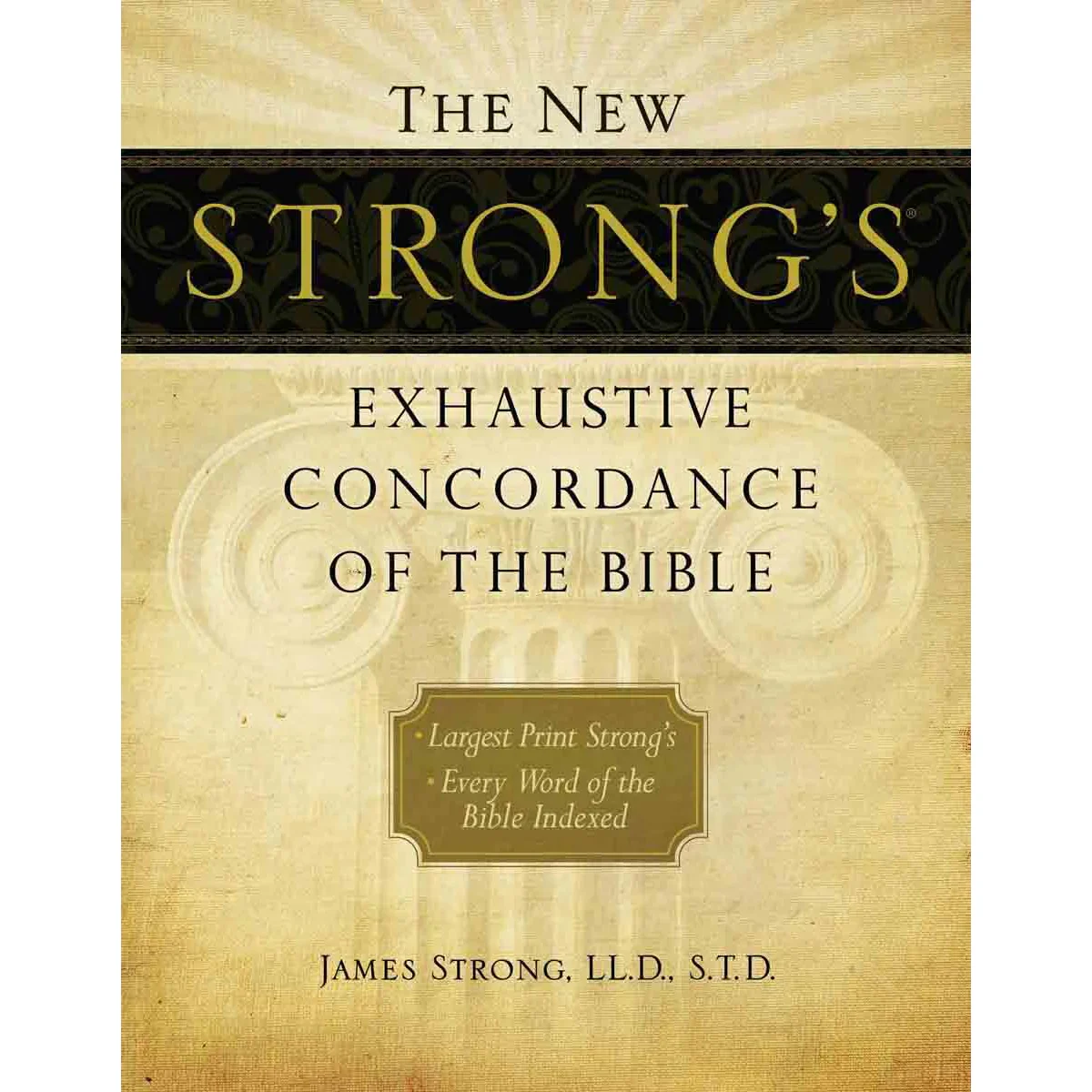
Most English Bibles can't carry the full weight of what's in the original Hebrew and Greek. The F.O.G Bible Project exists to change that — three new translations built publicly (a Study Bible, a Reader's Bible, and F.O.G Jr. for younger readers), plus a word-by-word renewal of Strong's Concordance restoring the depths most translations leave behind. It is Jean Paul's lifelong work, unfolding in public — and you're invited in.
Jean Paul Joseph is the lead editor of the F.O.G Bible Project. He works from a personal encounter with Jesus first, then draws on the scholarship of respected Jewish and Christian scholars — because the church was Jewish before it was anything else, and those roots change everything about how you read Scripture.
Simply create an account and choose your preferred Bible and reading style. The app will track your progress and help keep you accountable to the rhythm of daily Scripture engagement.
unmixed, i.e. (figuratively) innocent
ἀκέραιος(akéraios)
Strong’s Definition
unmixed, i.e. (figuratively) innocent
from G1 (Α) (as a negative particle) and a presumed derivative of G2767 (κεράννυμι);
“Behold, I send you forth as sheep in the midst of wolves: be ye therefore wise as serpents, and harmless as doves.”
No verses found containing this word study ID.
The Wine That Has Not Been Mixed
There is a sound in this word, akéraios, that carries the whisper of something untouched, something held back from the crowd of mixtures that fill this world. The Scripture speaks it only three times, yet each utterance is a bell that rings through the chambers of the soul. The root of this word reaches down into the art of mixing, of pouring one substance into another until the original is lost. But akéraios is the negation of that mixing — it is the wine that has not been diluted, the metal that has not been alloyed, the heart that has not been compromised. When the Holy One looks upon a soul and calls it akéraios, He is seeing something that has refused to become a blend of the world's additives.
From the Vintner's Cup to the Covenant
In the Greek world, this word belonged to the language of the wine merchant and the metalsmith. Keránnymi meant to mix, to mingle, to blend — and so akéraios meant unmixed, pure, unadulterated. The classical poets used it for wine that had not been cut with water, for gold that had not been debased with lesser metals. But when the translators of the Septuagint reached for a word to render the Hebrew concept of tam — the wholeness of heart that the psalmists cry for — they chose this very word. In the Greek version of the Psalms, the one who walks blamelessly before the Lord is described with this same akéraios. The shift is profound: what was once a physical description of substances becomes a spiritual description of souls. The Holy One does not want your devotion diluted with the waters of this age. He wants the wine of your whole heart, unmixed.
The Two Witnesses of Paul and Peter
The Apostle Paul uses this word in Romans 16:19, where he writes that he desires the believers to be "wise about what is good and akéraios about what is evil." Here the meaning bends toward innocence — not the innocence of ignorance, but the innocence of refusal. You are to be so unacquainted with evil that you do not even know its taste, like a cup that has never held anything but pure water. Paul pairs this word with wisdom, showing that the unmixed heart is not a naive heart but a disciplined one. The writer of Hebrews uses it in Hebrews 7:26 to describe the Great High Priest Himself: "holy, akéraios, unstained, separated from sinners." And Peter, in his first letter, commands the believers to long for the pure milk of the Word, using a related form of this same root. The early church understood that to be akéraios was to be like a nursing infant — not in immaturity, but in the single-minded hunger for what is genuine.
The Hebrew Bridge That Runs Beneath the Greek
When the Septuagint translators rendered the Hebrew Scriptures into Greek, they faced the sacred task of finding Greek vessels to hold Hebrew wine. For the word akéraios, they reached across languages to capture the Hebrew tam — the same root that gives us Job's description as "blameless and upright." In Psalm 37:37, the Greek version speaks of the akéraios man, the one whose end is peace. Jewish tradition holds that such a person is like the first day of creation — before any division, before any mixture of light and darkness. The rabbis of old observed that the word tam shares its letters with tamim, which describes the sacrificial lamb without blemish. Every time the Septuagint used akéraios, it was echoing the Temple, echoing the altar, echoing the requirement that what is offered to the Holy One must be whole and unmixed. You are that offering.
Send a Gift
This website is 100% donor-funded. Your generosity allows someone else to access this content for free.
Give a gift of $100 to sponsor a verse or page of your choice.
The Unmixed Life in a Mixed Age
The apostolic fathers carried this word forward into the early church. Clement of Rome, writing to the Corinthians, urged them to preserve their bodies as temples of God in akéraios purity. Ignatius of Antioch, on his road to martyrdom, spoke of the Eucharist as the medicine of immortality — an unmixed remedy for a mixed world. These early witnesses understood that the call to be akéraios was not merely a moral command but an ontological reality. You are not simply told to be innocent; you are told to become what you already are in Messiah. The Greek philosophical tradition had long valued the akeraios as the one who lived according to nature, uncorrupted by convention. But the apostolic teaching deepened this: you are not uncorrupted by your own effort, but by participation in the One who is Himself akéraios. Your innocence is not your achievement; it is your inheritance.
Why Not Another Word?
The Scripture could have chosen other words to describe this quality. It could have used hagnos, which speaks of ritual purity and ceremonial cleanness. It could have used katharos, which describes what has been cleansed from defilement. But akéraios carries a different note — it speaks not of what has been washed, but of what has never been stained. There is a difference between a garment that has been laundered and a garment that has never known dirt. The Holy One, in choosing this word three times, is revealing something of His heart: He longs for a people who have not merely been forgiven, but who have kept themselves from the very mixture of the world. Yeshua Himself said that the pure in heart shall see God — and that word "pure" in the Beatitudes echoes this same longing for singleness, for the eye that is single and the heart that is whole.
The Messiah Who Is the Unmixed One
In Hebrews 7:26, the writer declares that Yeshua is exactly this: akéraios. He is the High Priest who is holy, innocent, unstained, separated from sinners. This is not merely a description of His moral character; it is a declaration of His nature. He is the unmixed One in a world of mixtures. Every other high priest came from a lineage that needed purification, but He is the wine that has never been diluted. He is the gold that has never known alloy. When you look upon Him, you see what the unmixed life looks like in human flesh. And because He is akéraios, He can make you akéraios as well — not by your own striving, but by the mingling of His Spirit with yours. The early church understood this mystery: that the pure One imparts His purity to those who abide in Him, not by mixing the divine with the human, but by transforming the human into the divine likeness.
A Charge for Your Unmixed Heart
You live in an age that begs you to be mixed. Every voice calls you to blend your devotion with distraction, your faith with fear, your love with lesser loves. But the word akéraios stands against the tide. It calls you back to the simplicity that is in Messiah, back to the single eye and the undivided heart. Look at your life today and ask: where have I allowed the waters of this world to dilute the wine of my consecration? Where have I become a mixture when I was called to be pure? The Holy One does not ask you to be perfect; He asks you to be whole. He does not demand sinlessness; He invites singleness. Let the sound of this word ring in your ears until your heart becomes like the cup that has never held anything but His presence. Go and be akéraios — not by your own strength, but by abiding in the One who is Himself unmixed, and who waits to fill you with nothing less than His own fullness.