ἐλευθερόω
to liberate, i.e. (figuratively) to exempt (from moral, ceremonial or mortal liability)
Everything you need to know.
of Completion
This certifies that
Is on track to complete the Bible for the 1st time in 240 days.
Paul's Handkerchief is Bible study with a difference — going word-by-word through Scripture to reclaim the Ancient Near East context, romance, and mystery that modern translations often leave behind.
Only about 3% of people around the world who start the Bible ever finish it. The 3% Club is for those ready to break that cycle — reading the entire Bible at their own pace, backed by community and tools built to make finishing not just possible, but inevitable. You also get a certificate to celebrate your achievement.
Bible Cafe isn't just Bible study — it's a personal, intimate conversation with Him. Think less classroom, more kitchen table. It combines the original Coffee with Jesus experience with activities like quizzes, crosswords, journaling and more, all designed to let the Word shape your heart, not just your head.
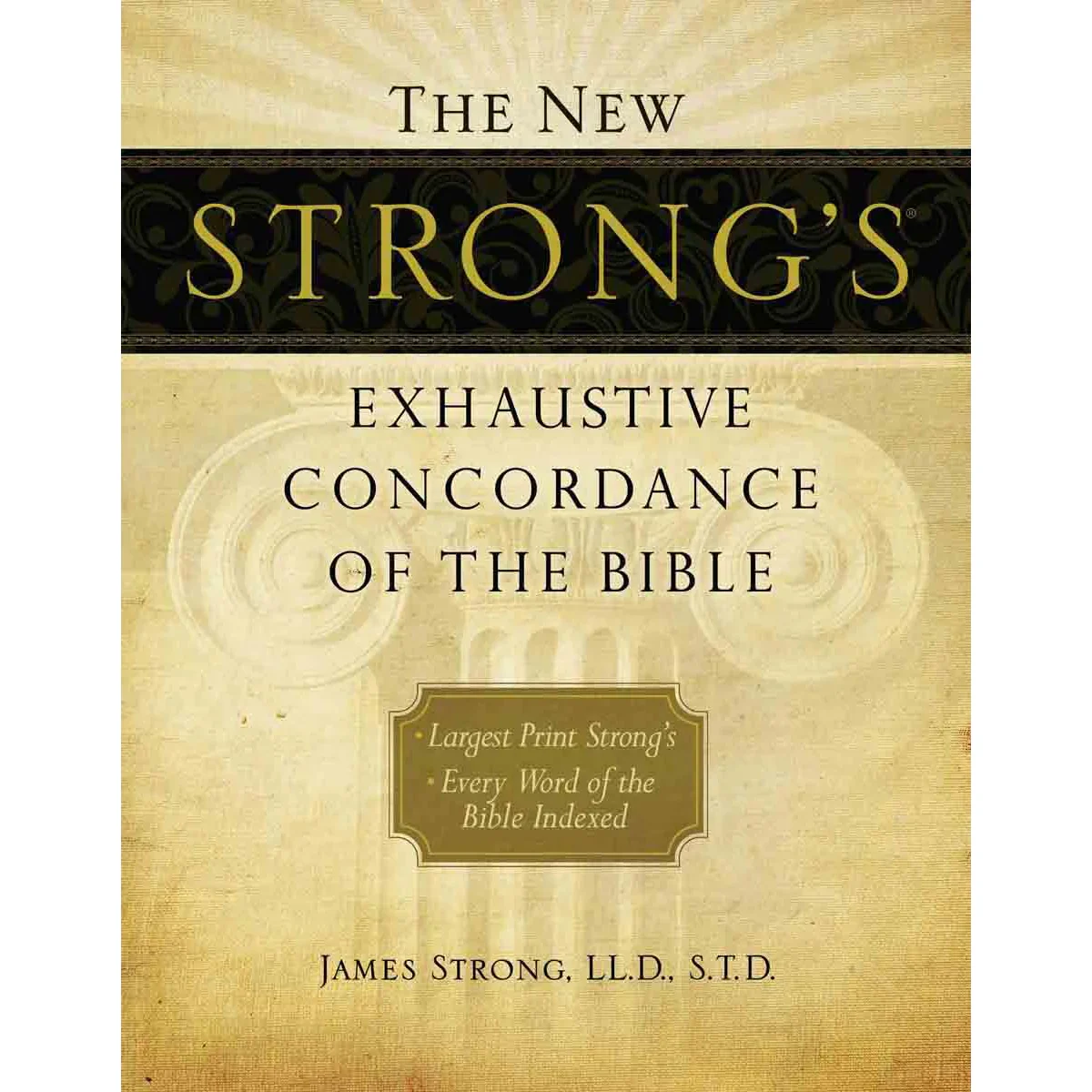
Most English Bibles can't carry the full weight of what's in the original Hebrew and Greek. The F.O.G Bible Project exists to change that — three new translations built publicly (a Study Bible, a Reader's Bible, and F.O.G Jr. for younger readers), plus a word-by-word renewal of Strong's Concordance restoring the depths most translations leave behind. It is Jean Paul's lifelong work, unfolding in public — and you're invited in.
Jean Paul Joseph is the lead editor of the F.O.G Bible Project. He works from a personal encounter with Jesus first, then draws on the scholarship of respected Jewish and Christian scholars — because the church was Jewish before it was anything else, and those roots change everything about how you read Scripture.
Simply create an account and choose your preferred Bible and reading style. The app will track your progress and help keep you accountable to the rhythm of daily Scripture engagement.
to liberate, i.e. (figuratively) to exempt (from moral, ceremonial or mortal liability)
ἐλευθερόω(eleutheróō)
Strong’s Definition
to liberate, i.e. (figuratively) to exempt (from moral, ceremonial or mortal liability)
from G1658 (ἐλεύθερος);
“And ye shall know the truth, and the truth shall make you free.”
No verses found containing this word study ID.
The First Liberation: A Verb Born in the Sea of Reeds
Twelve times this verb appears in the sacred writings, and yet each occurrence carries the weight of an exodus. The first time you encounter eleutheróō in the New Testament, it is on the lips of the Master Himself, speaking of a truth that sets a person free (John 8:32). But to understand the depth of this action, you must travel backward through the ages, to the moment when Israel stood at the shore of the Sea of Reeds, trapped between Pharaoh's chariots and the deep. The Hebrew word that the Septuagint translates with eleutheróō is not simply "to free" — it is natsal, a verb that means "to snatch away from destruction," "to deliver with violent love." When God liberated Israel from Egypt, He did not merely open a door; He tore the house down around them. The Greek mind understood freedom as a political or philosophical state — the right of a citizen to speak, to vote, to own property. But the Hebrew Scriptures, and the Messiah who fulfilled them, transformed this word into something far more intimate: eleutheróō became the very breath of redemption, the action of a God who reaches into the mud and pulls His beloved out of the furnace.
The Grammar of Deliverance: Aorist and Perfect, Act and State
The sages of old observed that the shape of a verb reveals the nature of the action. When you study eleutheróō in the apostolic writings, you find it most often in the aorist tense — a single, decisive act that stands complete. Paul writes to the Romans that having been set free from sin, you have become slaves of righteousness (Romans 6:18). The aorist participle here speaks of a liberation that happened once, fully, at the cross. But there is also the perfect tense, as when the same apostle declares that Christ has set us free for freedom (Galatians 5:1). The perfect tense means the action is complete and its effects continue into the present moment. Your liberation is not a memory; it is a living state. The passive voice dominates these passages — you do not free yourself. The early church understood this grammatical truth as a theological cornerstone: freedom is something done to you, not something you achieve. Even in the middle voice, where the subject participates in the action, the New Testament reserves eleutheróō for divine agency. No human being in Scripture uses this verb to describe their own accomplishment. Only God, through Messiah, performs this liberation.
The LXX Bridge: When Greek Frees the Hebrew Captive
The Septuagint, that ancient Greek translation of the Hebrew Scriptures, provides a crucial window into how eleutheróō carries the weight of Israel's story. In the Greek version of Exodus, when God promises to deliver His people from Egyptian bondage, the translators chose rhýomai more often than eleutheróō. But in the Psalms and the Prophets, a shift occurs. When Isaiah speaks of the year of the Lord's favor, the Septuagint uses eleutheróō to translate the Hebrew deror — a word that means "a release, a letting go, a liberty that restores what was lost" (Isaiah 61:1). The Hebrew deror is the same word used for the Year of Jubilee, when every slave returns to their family and every debt is cancelled. So when Yeshua stood in the synagogue of Nazareth and read from this very passage, declaring that He had come to proclaim freedom to the captives (Luke 4:18), He was not speaking of political autonomy. He was announcing that the Jubilee of the soul had begun. The apostolic tradition teaches that every use of eleutheróō in the New Testament echoes this Jubilee proclamation — a liberation that restores you to your original inheritance as a child of the Most High.
The Master's Action: Yeshua and the Liberation of the Bound
No moment in the Gospels reveals the meaning of eleutheróō more clearly than when Yeshua encounters the woman bent double for eighteen years (Luke 13:10-17). The text does not use the verb itself in this passage, but the pattern is unmistakable. The Master lays His hands on her, and immediately she stands straight. The ruler of the synagogue objects — why heal on the Sabbath? But Yeshua calls her a "daughter of Abraham whom Satan has bound," and He looses her. The Greek word for "loose" here is lýō, a close cousin to eleutheróō. The root eleuth- carries the sense of "going as one pleases," of movement without hindrance. This woman had been unable to look up at the sky for nearly two decades. She could not see the stars, could not lift her eyes to the hills from which her help came. When Yeshua freed her, He restored not only her body but her capacity for worship. The rabbis of old observed that the most profound captivity is not the chain you can see, but the one that keeps you from lifting your eyes to heaven. And so the Messiah's action teaches you that eleutheróō is not merely about being released from something — it is about being released to something. You are freed to stand upright, to see the face of God, to walk in the way of peace.
Send a Gift
This website is 100% donor-funded. Your generosity allows someone else to access this content for free.
Give a gift of $100 to sponsor a verse or page of your choice.
The Pauline Revolution: From Slavery to Sonship
It is the apostle Paul who takes eleutheróō and drives it like a nail into the heart of the age. No New Testament writer uses this verb more frequently, and for Paul, the word is inseparable from the gospel itself. In his letter to the Galatians, he writes that Christ set us free for freedom — a phrase that seems redundant until you understand the weight of it (Galatians 5:1). The early church fathers, particularly Ignatius of Antioch, recognized that Paul was fighting a war on two fronts: against those who would bind believers again to the law of Moses as a means of salvation, and against those who would turn freedom into license. Paul's eleutheróō is not the freedom of the Stoic philosopher, who achieves inner peace by detaching from desire. It is the freedom of the child who has been adopted into a royal house. The classical Greek world knew eleuthería as the status of a free citizen, one who was not a slave. But Paul redefines the very category: you were slaves to sin, but now you have been freed from sin and enslaved to God (Romans 6:22). This is the great paradox of the gospel — your freedom is found in a new bondage, a joyful servitude to the One who loves you. The apostolic faith teaches that this is not the freedom to do whatever you wish, but the freedom to become who you were always meant to be.
The Post-Apostolic Witness: Freedom in the Fire of Persecution
When the early church faced the fires of Roman persecution, the word eleutheróō took on a new and terrible beauty. Justin Martyr, writing in the second century, spoke of the martyrs who went to their deaths with a freedom that astonished their torturers. These believers had been set free from the fear of death itself. The classical Greek concept of freedom had always been tied to the body — a free man could not be chained or beaten without loss of honor. But the Christian understanding, born from the resurrection of Yeshua, declared that true freedom could not be touched by chains or flames. Clement of Rome, writing to the Corinthians, described how the apostles themselves were "set free" from the prisons of this world into the liberty of the age to come. The verb eleutheróō became a testimony: the one who has been liberated by the Messiah cannot be enslaved again, not by Nero, not by the sword, not by death itself. This is the freedom that the Greek philosophers longed for but could not grasp — a freedom that transcends circumstance because it is rooted in the unshakeable reality of the resurrection.
The Hebrew Echo: Deror and the Jubilee of the Heart
To understand the full resonance of eleutheróō, you must hear the Hebrew word it translates in the Septuagint: deror. This word appears in the law of the Jubilee, when the trumpet sounds and every slave goes free, every debt is cancelled, every inheritance is restored (Leviticus 25:10). The rabbis of old taught that the word deror is related to the idea of "dwelling" — the freed slave returns to their ancestral home, to the place where they truly belong. When the New Testament writers chose eleutheróō to speak of your salvation, they were drawing on this deep well of meaning. Your liberation in Messiah is not merely an escape from punishment; it is a restoration to your true home. You were created for communion with God, for the Garden that was lost, for the family of Abraham. The apostolic tradition holds that every act of eleutheróō in your life — every moment when the Spirit breaks a chain of addiction, every time the truth shatters a lie you have believed — is a foretaste of the final Jubilee, when the trumpet of the archangel will sound and all creation will be set free from its bondage to decay (Romans 8:21). Until that day, you live in the already-but-not-yet of freedom, walking in the light even as you wait for the full dawn.
Your Call: Stand Fast and Do Not Submit Again
You have been set free — not by your own striving, not by the strength of your will, but by the blood of the Lamb and the word of His testimony. The apostle's command rings down through the centuries: stand fast therefore in the liberty wherewith Christ has made you free, and be not entangled again in the yoke of bondage (Galatians 5:1). This is not a passive freedom. You must guard it as a shepherd guards the flock, as a watchman guards the city. Every day the old captor whispers that you are still a slave, that your chains remain, that the freedom you have tasted is an illusion. But the verb eleutheróō is in the perfect tense — it is finished, it is complete, it endures. You do not need to free yourself again; you need only to believe that you have already been freed. So lift your eyes, daughter of Abraham. Stand straight, son of the covenant. The One who liberated you from Egypt, from sin, from death, from every power that binds — He holds you now in the palm of His hand. Walk in the freedom He has given you, and let your life be a Jubilee proclamation to every captive you meet.